Formicinae ·
Camponotus
Camponotus vagus (Scopoli, 1763)
Haarige Holzameise (German)
Species information is not complete yet! Some care parameters or distribution details are still being verified.
Nest Temp.
24 ℃ - 28 ℃
Nest Moisture
40 % - 79 %
Outworld Temp.
18 ℃ - 28 ℃
Hibernation
Short
Founding
Claustral
Colony Form
Monogynous
Worker Size
6.00–13.00 mm
Queen Size
14.00–16.00 mm

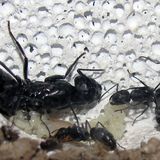
A Camponotus vagus colony in a nest made out of Ytong (AAC). You can also see a lot of eggs.
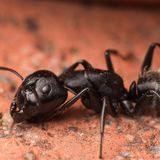
Keeping parameters
| Nutrition: | Insects, meat, sugar water, honey etc. |
|---|---|
| Nest temperature: | 24 ℃ - 28 ℃ |
| Nest humidity: | 40 % - 79 % |
| Outworld temperature: | 18 ℃ - 28 ℃ |
| Outworld humidity: | 40 % - 79 % |
| Hibernation required: | yes: end of november until end of february |
| Worker polymorphism: | Yes (Polymorphic) |
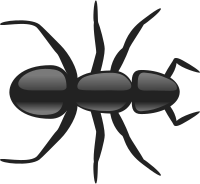
Sizes & Scale Comparison
Worker
6.00–13.00 mm
Min
 6.00 mm
Max
13.00 mm
Queen
14.00–16.00 mm
Min
14.00 mm
Max
16.00 mm
Male
9.00–11.00 mm
Min
9.00 mm
Max
11.00 mm
Nuptial Flight & Activity
Recorded flight months:
11 h - 15 h
Warm temperature
April
May
June
Food Acceptance
Food Database
Log in
or
create a free account
to vote on how well this species accepts specific food items.
Protein

Argentine Wood Roach (Blaptica dubia)
Popular and easy-to-breed feeder roach with a soft body and no climbing ability, making it hard for it to escape smooth-walled containers. Available in a wide range of sizes across its life stages, making it suitable for many ant species. Has a fairly hard exoskeleton, so cutting it open is recommended when feeding smaller colonies.
No votes yet

Desert Locust (Schistocerca gregaria)
Large, protein-rich feeder insect available in a wide range of sizes from tiny hoppers to full-grown adults, making it easy to match to colony size. Strong hind legs allow them to jump powerfully, so keeping them contained before feeding is recommended. Best offered freshly killed, as the tough exoskeleton and jumping ability can make live adults difficult prey.
No votes yet

House Cricket (Acheta domesticus)
Popular and highly accepted feeder insect across most ant species. Available in a range of sizes, making it easy to match prey size to colony size. Best offered freshly killed or pre-crushed for smaller species, as live crickets can injure ants or escape into the formicarium.
No votes yet

Housefly (Musca domestica)
Common feeder fly, usually bred in flightless ("curly-wing") strains for safe use in formicaria. Good all-round protein source; larvae (maggots) can be offered too.
No votes yet

Madagascar Hissing Cockroach (Gromphadorhina portentosa)
Large feeder roach with a notably thicker exoskeleton than Argentine wood roaches, so cutting it open before feeding is essential. Due to their considerable size, best suited for large colonies with a high protein demand. Nymphs can be used for smaller colonies, though cutting is still recommended.
No votes yet

Mealworm (Tenebrio molitor)
Larval stage of the mealworm beetle, widely available and easy to store. A good staple protein source for larger ant species; the tough exoskeleton can be harder for smaller species to open, so crushing or cutting is recommended for them. Pupae and adult beetles can also be offered.
No votes yet

Migratory Locust (Locusta migratoria)
Similar in use to the desert locust but generally smaller and slightly easier to handle. Widely bred as feeder insect due to good availability across sizes, from hoppers to adults. As with desert locusts, strong jumping legs mean live adults should be secured or pre-killed before feeding to smaller colonies.
No votes yet

Red Runner Roach (Shelfordella lateralis)
Also known as the "chocolate roach" due to their coloring. Fast-moving and quite active, so best offered freshly killed to prevent them fleeing or harassing the colony. Thinner exoskeleton than Blaptica dubia or Madagascar hissing roaches, making them easier prey without extra preparation for many ant species.
No votes yet

Silent Field Cricket (Gryllus assimilis)
Also known as the Jamaican field cricket. Larger and more robust than house crickets, making it well suited as prey for bigger ant species. Much quieter than other cricket species, which makes it a more pleasant choice for keeping as feeder stock at home.
No votes yet

Two-Spotted Cricket (Gryllus bimaculatus)
Also known as the Mediterranean field cricket. Large, robust cricket species commonly used as feeder insect, similar in size to Gryllus assimilis. Widely available and easy to breed, though its size makes it best suited for medium to large ant species; pre-crushing or cutting is recommended for smaller colonies.
No votes yet
Carbohydrates
Agave Syrup
Sweet syrup extracted from the agave plant, similar in consistency to honey but with a milder taste. Alternative carbohydrate source sometimes offered to ants, particularly as a vegan substitute for honey. Should be diluted with water before feeding, as it is often too thick and concentrated in its raw form.
No votes yet
Blossom Honey
Honey produced primarily from floral nectar, resulting in a lighter color and milder flavor than forest honey. Natural carbohydrate source occasionally offered to ants as a treat or supplement. Should be diluted with water before feeding, as it is often too thick and concentrated in its raw form.
No votes yet
Forest Honey
Honey produced mainly from honeydew secreted by aphids and other sap-sucking insects rather than floral nectar, giving it a darker color and stronger flavor than typical blossom honey. Rich, natural carbohydrate source occasionally offered to ants as a treat or supplement. Should be diluted with water before feeding, as it is often too thick and concentrated in its raw form.
No votes yet
Inverted Sugar Water
Sugar solution where sucrose has been broken down into glucose and fructose, either through heating with an acid or enzymatically. Often preferred over plain sugar water as it's less prone to crystallizing and may be easier for some ants to digest. Offered the same way as regular sugar water, via a shallow dish, cotton/sponge feeder, or special ant feeder.
No votes yet
Maple Syrup
Sweet syrup made from the sap of maple trees, with a distinctive flavor and moderate sugar concentration. Alternative carbohydrate source occasionally offered to ants as a treat or supplement. Should be diluted with water before feeding, and is best offered only via a special ant feeder, as it becomes extremely sticky when it dries out.
No votes yet
Sugar Water
Simple carbohydrate source made by dissolving sugar in water, typically offered in a shallow dish, via cotton/sponge feeder or via a special ant feeder. Provides quick energy and is readily accepted by most ant species, especially during periods of high activity or brood rearing. Concentration and freshness matter; solutions left out too long can mold or ferment.
No votes yet
Don't see a food item you fed this species?
Add a new food item
Community Difficulty Rating
No community ratings yet. Be the first to share your experience with this species!
Log in
or
create a free account
to rate the keeping difficulty of this species.
Scientific classification
| Kingdom: | Animalia |
|---|---|
| Phylum: | Arthropoda |
| Class: | Insecta |
| Order: | Hymenoptera |
| Family: | Formicidae |
| Subfamily: | Formicinae |
| Tribe: | Camponotini |
| Genus: | Camponotus |
| Species: | Camponotus vagus |
General information
| Colony structure: | Monogynous |
|---|---|
| Worker polymorphism: | Yes |
| Nuptial flight: | April, May, June |
| Colony founding: | claustral (queen does not need any food) |
| External links: | AntWiki |
Names & Synonyms
Common names
Haarige Holzameise
Synonyms & Historical Names
Formica fuscoptera